-2-1-1.png?width=620&height=160&name=Kasvaa+Logos%20(2)-2-1-1.png "Kasvaa+Logos (2)-2-1-1")

“Authenticity is the daily practice of letting go of who we think we’re supposed to be and embracing who we are.” — Brené Brown Prospecting ...
3 min read
 Stephen Lehtonen - 13 Jan, 2026

Over the last few months, I have written about and interviewed experts in our Kasvaa Webinar series on the perils of AI adoption.
My positions are meant as no disrespect to the technology.
On the contrary, my focus is driven out of a belief in its power and a desire to see it used the right way.
Today, I’ll give a few ideas of positive use cases.
The first step is to understand what AI is. Here, specifically, we’ll discuss Large Language Models or LLMs.
AI is a specific type of tool for a particular function.
As you may already appreciate, LLMs are statistical machines. They don’t (yet) think as a human would or have the ability to create like a human would.
Instead, the models predict what the most statistically likely next word, phrase, or idea should be as it generates text outputs.
If you think of that as a blunt tool that does some pretty extraordinary stuff, it can help us figure out how to use it for growth.
The statistical prediction tool can be used to guide our creative (read, human) process and, conversely, to provide unbiased insight into our existing creative outputs.
Using LLMs to be creative
Let’s get one thing straight.
LLMs can’t “create” anything.
They “assemble” something that looks like original work, but is actually constructed off the backs of the world’s database of writing. It’s rule-based. Humans assemble too, but creatively, not statistically.
This weekend, I saw Paul Thomas Anderson accept numerous Golden Globes for One Battle After Another. In one acceptance speech, he described writers as “magpies” that “steal all the bits and pieces that everybody says the best we can.” The difference is that when Anderson does it, it’s in an unpredictable and innovative placement. His locution is what makes his scripts so endearing.
But an LLM will produce the most statistically “normal” or average result.
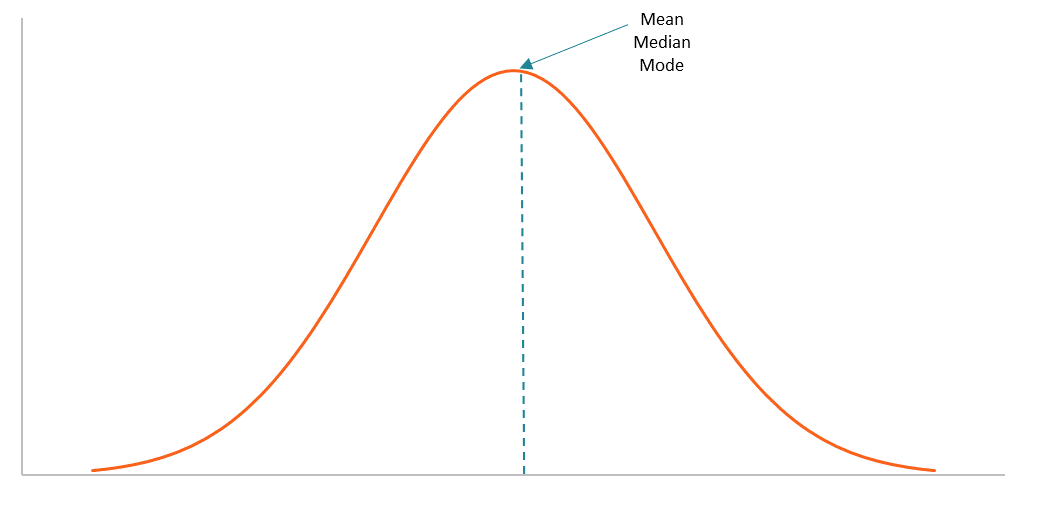
The LLM will seek to assemble language that sits at the middle of the bell curve above. Whereas, creative works of fiction strive (typically) to be further to the right of the bell curve. I’m currently reading the riotous 90s classic, Infinite Jest by David Foster Wallace. As I do, I am constantly struck by the feeling that this creative work is 1 of 1. No other person but this person at this time could dance between characters, themes and narrational voices like he does.
So AI can’t truly create, but it CAN help your creative process.
Here are a few ideas.
1. Ask ChatGPT and disregard its adviceIf your goal is to be innovative. Ask ChatGPT what it thinks and ignore it. Again, the LLM will provide you the most statistically average response (middle of curve). If you want to be different, don’t do what it says.
2. Use the LLM to insert randomness into your creative processMusic producer and recording artist, Brian Eno, working with the artist Peter Schmidt, constructed a set of prompts to help his musicians get unstuck. The prompts were constructed as a deck of cards and he called it, “Oblique Strategies.” When an artist or band is stuck, a card would be pulled at random to help them move around the problem and approach from a new direction. This structured randomness could also be deployed by an LLM.
Let’s say you are writing a blog post for your business but can’t think of what to write about. You could give the model a bit of information about your goals, customers and products and ask it to give you a prompt for a blog post. The prompt will be statistically average, reflecting on the market consensus or need, but your response will be uniquely human since you will write the post yourself.
3. Rapid prototypingThis came up in my conversation with JibJab CEO, Paul Hanges. Instead of using AI to generate your final ad copy or video, have it produce several completely AI-generated options to test. Then, when you get market feedback (from a survey or direct user engagement on social media) you can take the most engaging concept and put your creative juices behind the selection. Here, the goal is not to use AI for the final product but for the starting model. Then build a creative idea based on the framework that has the most legs.
Flip side of the coin: Using AI to analyze your existing creative library
Have you ever done a statistical analysis on your creative outputs?
You might be thinking, “I am not a creative person.” Here I am using “creative” in a generic sense of anything that you have made yourself. Your Sent email box would qualify as a creative oeuvre of sorts.
How would you describe your email tone? Are you succinct or verbose? Does your style vary based on the receiver (title, gender, etc)?
The goal is for you to get an unbiased analysis of your work. No one thinks that they themselves are prejudiced, but a statistical model that can analyze language might draw out your latent biases.
You might have to provide the model some guidance, but a lot of this feedback is available to you. Again, the statistical model doesn’t have a value system on what is right or wrong, but it will tell you what it sees if you are brave enough to ask.
Conclusion: AI is a tool to use before and after the creative output
In short, LLMs can be a valuable tool to increase innovation and creative output at your organization. But unless you enjoy statistically average output (i.e., AI slop), it just won’t do the work for you.
That’s okay because you are a creative genius!
So let’s get cracking on innovation in 2026!
Schedule a time here
P.S. I’ll be hosting an exciting conversation on this topic on Jan 22. Sign up here to join the webinar.