-2-1-1.png?width=620&height=160&name=Kasvaa+Logos%20(2)-2-1-1.png "Kasvaa+Logos (2)-2-1-1")

For the last ten years, I’ve had a difficult relationship with comedy.
8 min read
 Stephen Lehtonen - 26 Aug, 2026

“What’s in a name? That which we call a rose
By any other name would smell as sweet”
~Romeo and Juliet 2.2.43-44
In arguably the most famous play in the English language, a teenage girl stands on the balcony and wonders about the challenge of loving someone from an enemy household.
You know the story.
Put in commercial language, young Juliet had discovered an asset, one that should appreciate over time. However, the asset was part of a conglomerate, it was bundled up and shrouded in the trappings of her tribe’s sworn enemy. If only her beau, Romeo, weren’t a crumby Montague!
Couldn’t we just call him something else?
So went my thoughts upon hearing about the so-called “Trump Accounts.”
The program gives $1000 to children born in the years 2025-2028. The funds are secured in a mutual fund that grows alongside the stock market. Others can add to it and the child can use the money for college, a first home purchase or retirement.
Depending on your political persuasion, you may have been equally repelled or attracted by the same.
Nevertheless, giving money to children to participate in the growth of the stock market is a good thing.
So today, I’m trying a little bit of bipartisanship.
This article examines Trump Accounts by:
- Acknowledging some well-placed concerns with the program
- Arguing that they can be a tool for wealth creation
- Showing how our superficial focus on naming and political tribalism is reflected in our various biases in the workplace
Acknowledging some…apprehensions
One of the best classes I took in business school was with Robert McCann, or Dr. Bob as we sometimes called him. He taught us how to present and influence audiences. I gave a TED Talk when I was at UCLA and owe a lot to his preparation.
One of the nuggets he dispensed was that early on in any presentation, you need to acknowledge the unspoken concerns or questions of the audience. Otherwise, they won’t listen to you.
So let’s have it out.
The first lament I’m hearing is something like, “Why do they need to be called “Trump” Accounts. Is he paying for them?”
No, in fact, the taxpayers pay for these accounts and thanks to an IRS contractor, we know that Trump and other billionaires don’t really pay taxes.
Misnomer? Sure. Bad product? Not so fast.
Like Juliet’s rose, the name doesn’t change the object. In fact, the Trump Accounts mirror the respective bills put out by Democratic Senator Cory Booker and Republican Senator Ted Cruz. Even if the name sounds partisan, the origins are not.
And besides, Trump has been putting his name on wine, steaks, meme coins and garish buildings for 50 years.
Sticking his name on stuff is kind of his thing.
Complaining about it is a bit like bemoaning that rain is wet. It’s one thing to wish it hadn’t ruined your picnic, it’s another to argue with its fundamental qualities.
But even if you get over the self-absorbed branding, many have argued that this program is most likely to be adopted by folks who have the wherewithal to know about and sign up for it.
In fact, the place to sign up for it is on your tax return and many of those who represent the bottom of the wealth disparity may make too little to file taxes.
Furthermore, a Public First survey found that over half of respondents had never heard of the accounts and 29% said they had heard of it, but didn’t know what they were.
This is, indeed, a messaging problem.
But, here again, the product is not the problem, it’s the communication and distribution of the product.
So I’m doing my part by promoting the product here. Please share this widely, particularly to those with the most to gain from it.
Finally, the most cynical view of the program that I can conceive of is actually not one that I have seen anyone else make yet: adoption in this program can artificially buoy equities markets.
Trump loves to highlight the stock market as a KPI for his overall job performance. Could he possibly be aiming to drive up the overall markets with this program?
Of course, the U.S. equities market is over $75 trillion, and the amount invested so far represents .00001 % of the overall market. It’s not really a needle mover.
Nonetheless, this program, however marginally, helps the overall stock market by expanding the pool of long-buyers. The program, by its very rules, encourages more liquidity in the market, creating vast amounts of buying that can partially mask sell-offs due to, say, I don’t know, a war that causes the price of a barrel of oil to top $100.
To this argument, I’ll just say that people can do the right thing for the wrong reasons. A pious gift to the hungry still puts food on their plates.
Okay, now that we've got that off our chest, let’s look at why this program is so important.
Why Investing Matters
Broad early investment for special purposes like college and retirement is an unfettered social good for three reasons:
- It’s free money for kids
- It changes a young person’s “psychology of the possible”
- It’s a pro-family policy
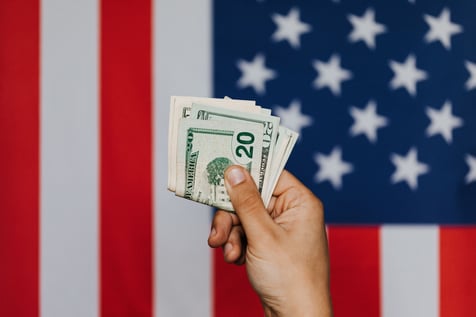 Let’s start with the obvious. The government is giving $1,000 to every kid born in the calendar years 2025-2028. That money, while untouched, grows in a low-fee broad investment vehicle similar to other mutual funds.
Over time, equity investments are good bets. The stock market tends to grow about 6-7% a year on average (adjusted for inflation).
Wealthier families benefit from this growth more than less wealthy families because they own more of the investment.
This program allows for broad participation in something that typically only benefits the already wealthy.
By making this available to all children, this can have huge impacts on who gets to participate in the stock market.
While not a panacea on its own, this policy can change the perspective of what is possible for millions of young people.
Imagine I gave you a coupon for a discount for three unique assets. The coupon would universally allow you to get a better deal on a work of art, a trip to Japan, or a commensurate salary booster when you are 65.
Suppose further that you have never considered acquiring artwork or traveling outside the country. Suddenly, you have options. Maybe the coupon isn’t enough to cover the costs of the art, but now you find that you have allowed fine art to be part of your consideration set.
In the book Bluefishing: The Art of Making Things Happen, author Steve Sims talks about how he likes to go to a fancy hotel and ask to see their best room. The practice is insightful because a) they always do it for a potential customer who asks and b) it changes the perspective of the person making the request. By going to the penthouse and walking around, they can visualize themselves in the situation. Now, if they want, they will consider if that room is for them. It turns an imaginary good into a more real one.
$1,000 gift to an infant can grow to as much as $6,000 for college. That’s real money. No, it’s not enough, but the child growing up can know that it’s an option to take or decline. And the perfect need not be the enemy of the good.
Furthermore, this program will encourage saving along the way. Asking for a financial contribution may become more accepted if everyone in your 5th grade class is asking for “college money” instead of a video game. Teaching kids how money grows over time in the market just opens them up to wanting to participate in it.
Perhaps giving to a kid’s college fund could become as easy as donating to the barista for your morning coffee. When I attend my children’s school or extracurricular programming, I am often floored by the academic and artistic abilities of my kids and their peers. Imagine if instead of getting just a cheap medal or a certificate, they allowed parents to donate via QR code directly to the kid whose science fair project showed the most promise. Saps like me would probably give a little bit to all the participants, but you know the kids that really pushed it would get more money. I’m sure someone will say that’s unfair, but I sort of like the idea of kids pushing themselves in academics and being rewarded for it with future college or retirement spending.
Finally, this is a pro-family policy. Maybe it’s unfair to those who cannot or choose not to have children. I’m open to their perspective here. But it’s also expensive to have children and we are seeing declining birth rates in the U.S. We need children to further humanity and to work to cover the social safety net when we are old. Policies that marginally encourage families to have children should be welcomed for the whole of society. It’s true that many families are struggling to survive today. This policy does nothing to address the current affordability crisis, but it’s also a gift horse that we shouldn’t look in the mouth.
Why this matters for your business
You might be thinking, “What does any of this have to do with my business growth?”
Fair enough.
I’m not a political pundit or a personal finance guru. This is a business blog for owners and operators of growing businesses.
Here is why this all matters.
Just as we might have a bias against the name on this investment product, we also harbor biases at work.
As a business leader, do you really let the best ideas win? Or do you filter what you hear through the messenger?
Most of our biases for or against an American president are fairly conscious. But research shows we all hold unconscious bias and it impacts our ability to find the best ideas and strategies at work.
 Project Implicit is an online research assessment where researchers from a handful of universities test the implicit bias of volunteer subjects. The test asks subjects to punch a letter on the keyboard for “good” and another letter for “bad,” depending on the prompts that were flashed in front of them. Then pictures of black and white faces flash and the subject needs to sort the faces along with the good and bad words. If the subject is prompted to hit the same key for “good” and the white-skinned faces, they generally can do so with less errors and at greater speed than if the same key is used for “good” and black-skinned faces. These implicit biases are compared with folks' stated beliefs that are normally not explicitly racist.
As leaders, we hold these biases whether we want to admit them or not.
If you scroll on social media or cable news, your brain will make associations with the people you see. Depending on those associations, you will be primed to accept or reject the claims of the person speaking.
Acting on these biases is bad for society, but it can also have financial consequences to the health of your business.
For example, in sales, you might disregard a potential customer because of your preconceptions. Think of the iconic scene in Pretty Woman when Julia Roberts is given the cold shoulder by a Rodeo Drive retailer (“Big mistake. Huge!”).
I once had a boss who reviewed my sales lead sheet and commented that a person with a particularly ethnic name would “never be our customer.” As someone who has had the pleasure of working with folks of all types of names, I can say that I have financially benefited to the degree I have been able to check whatever bias I may have been primed to hold.
Indeed, racial bias clearly harms the recipient of prejudice, but it also harms the inflictor. This dynamic was powerfully captured in Heather McGhee’s work, The Sum of Us, in which she opens the book with the history of communities draining public pools following the Civil Rights Act, rather than allowing for the integration of all bodies in the same public place. In the end, the white communities lost their public resources along with the black families they sought to marginalize.
As a business owner, you may be missing out on customers that you don’t consider targeting because they don’t fit your prior experience.
How can we address this?
On the sales and marketing front, look for diverse salespeople who might be less primed to reject buyers out of hand, or simply remind yourself constantly that anyone could be your customer. Fight the implicit bias with explicit reminders.
In strategy meetings, seek ways to allow for a diversity of voices with equal weighting. Harvard Business Review notes that, “Women, people of Asian descent, and first-generation professionals report being brought up with a “modesty mandate” that can lead them to hold back their thoughts or speak in a tentative, deferential way.” Instead of letting the loudest people in the room drive the conversation, smart leaders ask for, and really listen to, ideas from all.
Finally, you can look to root out biases in your organization by studying the culture. How information is shared across organizations and who gets a say is what determines the culture of an organization. Corporate culture may seem like a nebulous topic, but it can actually be measured.

In fact, at Kasvaa, we have a client that does just that. Christine Cutucache is a PhD scientist who works with executives to measure the culture of organizations against the claims of dynamic CEOs. The best CEOs seek her rigorous process because she can help them actually create the workplace they profess and desire to have.
Blind Investing
"I would rather be stricken blind than to live without expression of mind"
~Tupac Shakur
The moral of the story is that sometimes what we see can hinder us from making good decisions. Our biases are a hindrance to performance and it takes work to put them in check.
While my kids aren’t eligible for this free money, I know that no matter what you want to call the accounts presented by the current administration, they represent an opportunity for American families.
If someone offered me free money for my kids, I’d call that a good deal.
Want to grow your business without prejudice? Let’s chat.