After nearly 5 years in business, Kasvaa is celebrating with a new website, powered by Hubspot CMS. Our purpose in doing this was to make it...
3 min read
 Stephen Lehtonen - 3 Nov, 2026
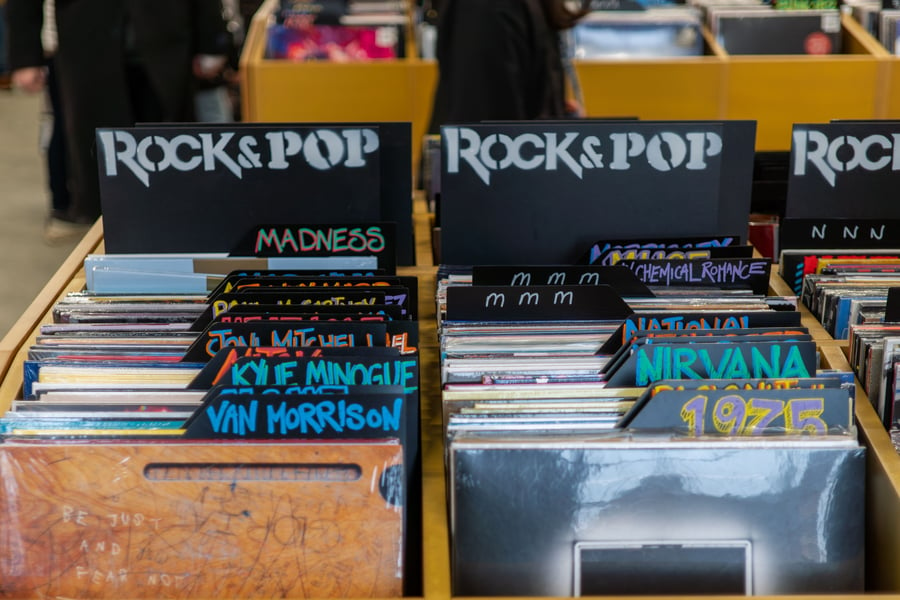
I remember the exact feeling, sitting in the back seat of my parents’ car, listening on my Walkman to Nirvana’s Nevermind.
That 11-year-old boy had never heard anything like it.
Rage, depression and anxiety all bottled into a cocktail of sonic energy. It made me feel sad and happy at the same time.
Be it Marcel Duchamp flipping a urinal upside down or Frank Gehry’s twisting metal walls like ribbons, artists always seek to reinvent and disrupt.
They push boundaries and push against the commercial forces that dominate.
Or at least they used to do that.
In David Marx’s recent cultural compendium entitled Blank Space: A Cultural History of the Twenty-First Century, the writer blasts through the first quarter of the century in broad strokes. His central thesis is that bands like Nirvana represented the last class of artists that chose disruption over commercial interests.
His book opens with a tale of grunge-sensation Pearl Jam concerned that the popularity of their breakout album, Ten, will jeopardize their perceptions of sincerity with their loyal fanbase.
They didn’t want to look like a “sellout.”
In the 1990s, there was nothing worse than that.
Fast forward to today and you find Olivia Rodrigo hawking Crumbl cookies and Taco Bell beverages.
While this screed can easily be written off as “old man cane waving,” it’s also undeniable that art and commerce have become more aligned in recent years.
This got me thinking about why that might be.
My conjecture is that cultural forces tend to flow downstream of technological ones. Technology opens new paths for artists to do their craft.
But today’s consumer technology naturally lends itself to a flattening of culture and commercial hegemony.
The two biggest trends in consumer technology over the last 15 years have been algorithmic social media and artificial intelligence.
Both create something that is a derivative of what already is.
 When Jackson Pollock threw paint on a canvas, he upset a medium, pushing people to reexamine what the borders and definitions of the art form were. The same goes for Grandmaster Flash scratching records at parties in the South Bronx in the 1970s or James Joyce reinventing the English prose in Ulysses.
But today’s cultural and technological forces prize the previous.
And the problem with what was is that once we have canonized it, we stop looking at it. We don’t feel the electric jolt of its novelty and the challenges it presents.
An algorithm traps you within the cloisters of your previous experience and says, “We’ve been watching you. Here is more of what you like.” But no one was watching the gay, Black and Latino kids in lower Manhattan in the late 1970s when they danced all night to disco music. So they created something new that celebrated their differences and created a community among the socially marginalized. It wasn’t until larger commercial acts like the Rolling Stones (FWIW, I personally love Some Girls) and Hollywood’s offering of Saturday Night Fever took disco to the mainstream that the movement lost its virality.
And just as algorithms lead us to “more of the same” we see a new commercial force emerge with artificial intelligence.
We are awash in AI slop. The stuff ransacks the creative output of humanity and serves you up a homogenized and fractionalized version from the artistic detritus. Our initial wave of wonder that it could happen (2023) quickly recedes as we feel the empty hollowness of the wave that leaves no residue (2026).
This puts the artist in a terrible bind.
If they want to create, they have two options for their distribution. They can seek to enter the digital landscape whereby they must conform to our prior assumptions of art in order for algorithmic selection to render their work viewable to an audience that relies upon the corporate means of distribution or attempt to create something interesting in obscurity wherein the only thing that would observe it is the all-Hooveing AI model that can consume and repurpose the work with impunity.
A third option would be to create physical media like a zine or something that ten people will read.
Excuse the language, but this is fucking depressing.
But it gets worse!
I have the pleasure of being the dad of two of the most brilliant young women I have ever met.
My youngest is 14 years old, a writer, an actor, singer, playwright and leader in her school’s student body.
She recently complained to me that during a group brainstorm, her advisor or teacher pestered them to use AI to get some ideas going. “We have ideas!” she protested to the “educator.”
AI’s broad commercial purpose is for the mechanical reproduction of processes we understand and need to replicate. Art is, by definition, a new creation and doesn’t play well with this tech. Education has no use for AI because the whole point of being a child is that you don’t have any process yet. You get the space to create and fail in order to understand how you might do it best. When we are lucky, a young person does it the way no one has ever done before.
That’s how we innovate as a culture.
But commerce’s interests are not cultural, but financial.
As business leaders, what are we to do?
We can start by paying actual artists to create stuff.
Enlist a designer to make your promotional materials rather than generating AI slop.
Hire live bands for your events or a comedian to be the emcee.
And stop stealing from artists to make recycled garbage that floods our commercial channels like LinkedIn.
Privately, we should seek artists that don’t bend to commercial interests, knowing that new ideas can’t come from an algorithm.
This is the only way to subvert the corporate interests and keep artists from the Faustian bargain described above.